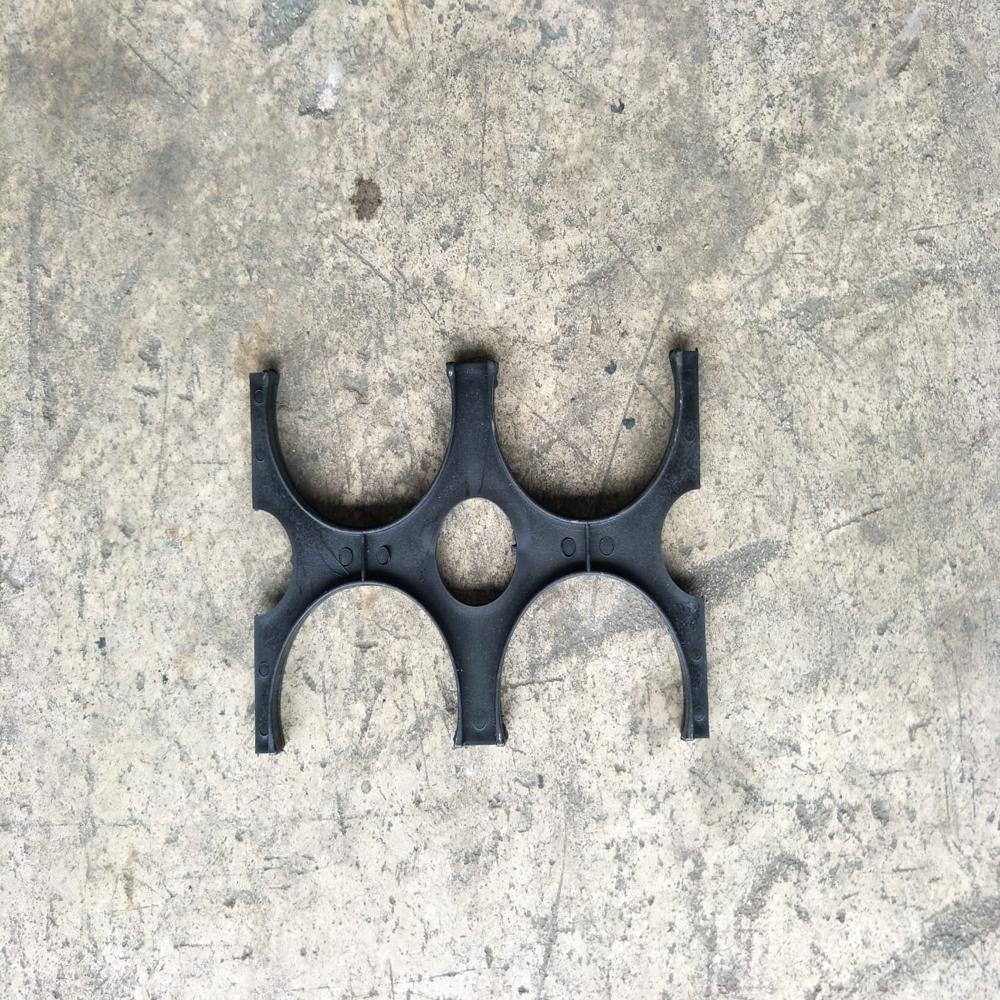
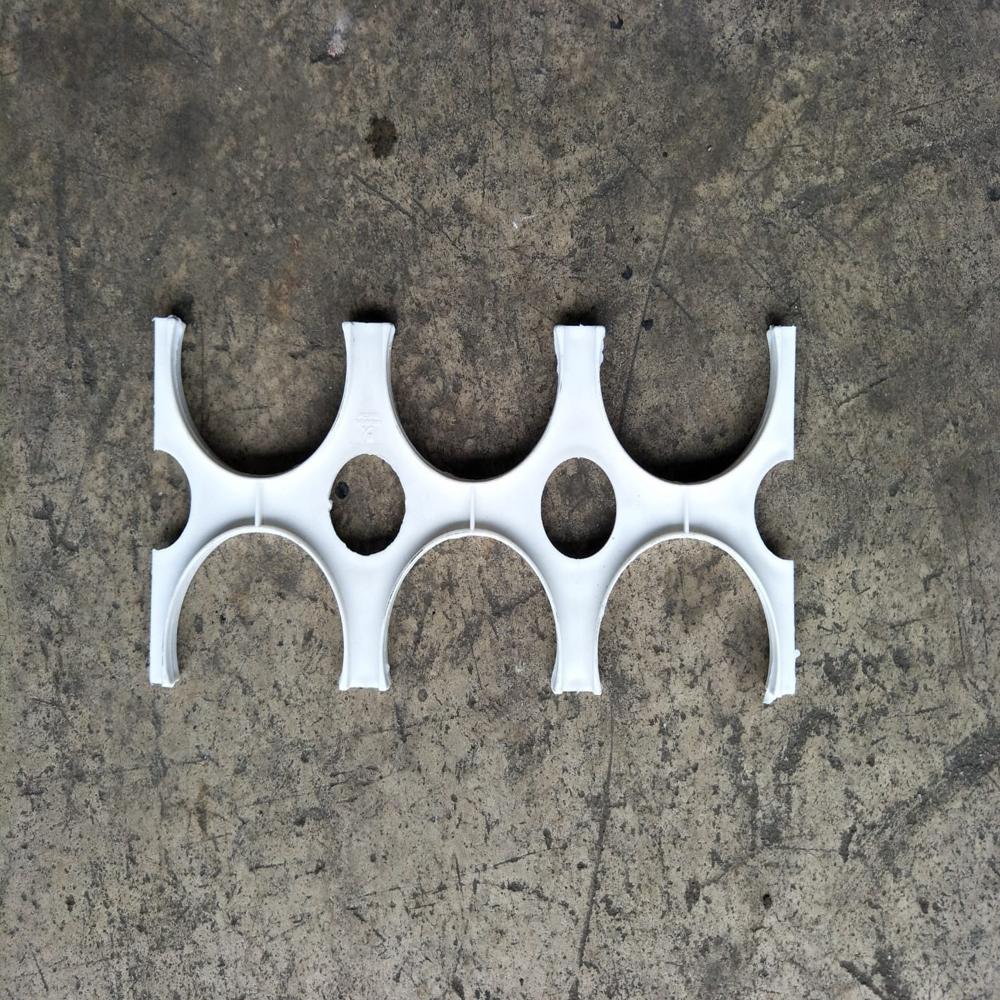
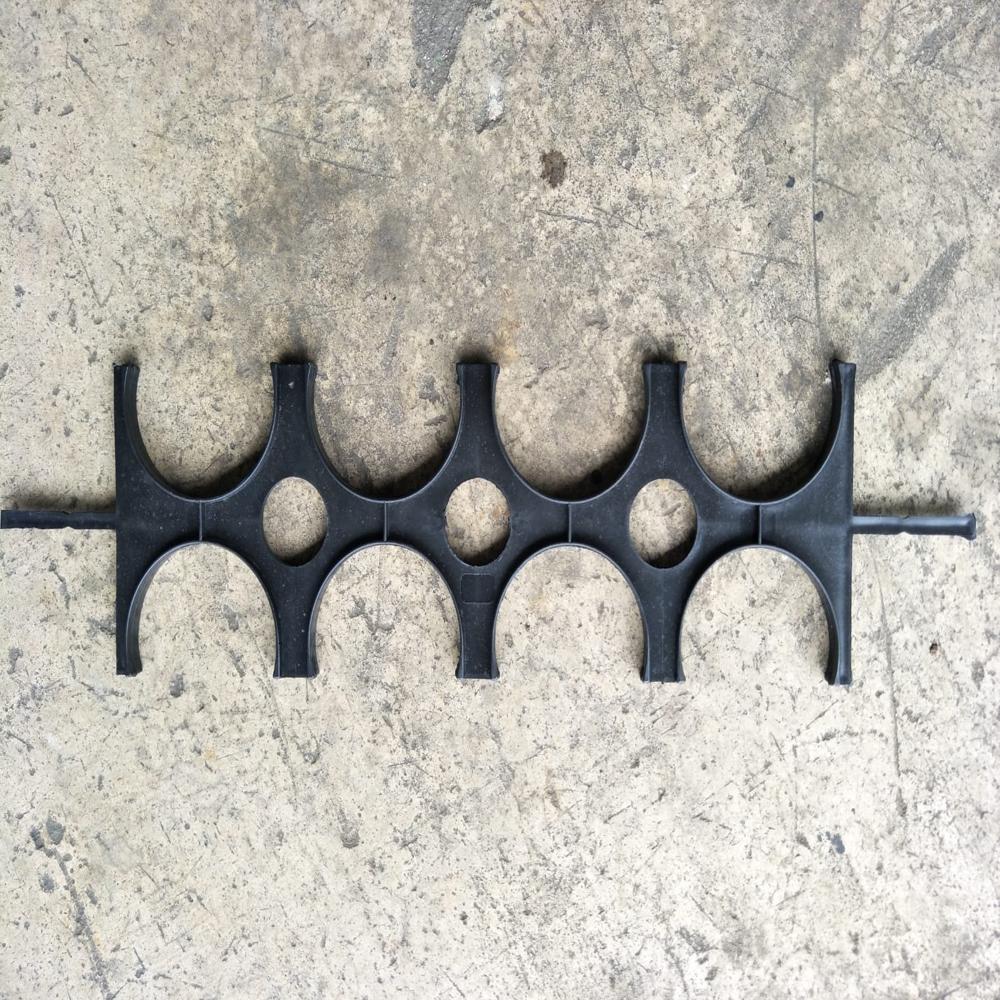
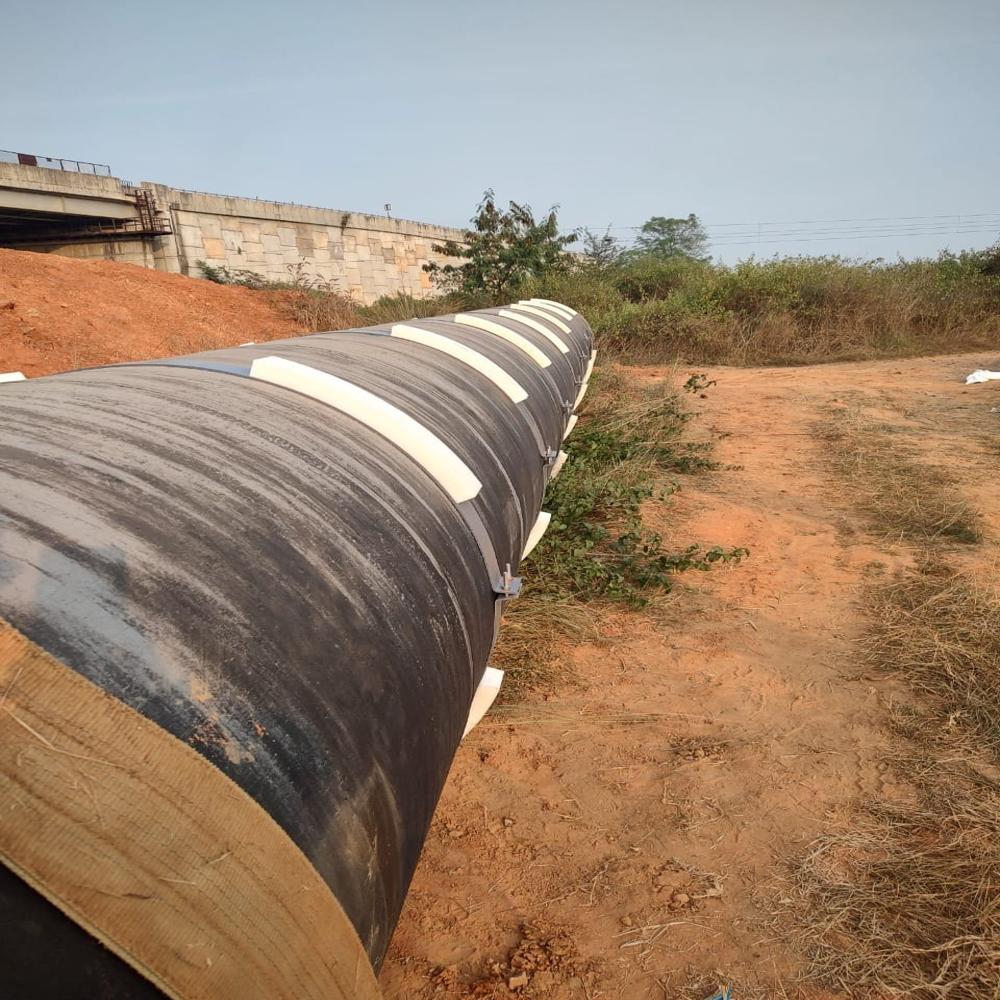
About Duct Bank Spacers Spacing
Duct Spacers shall be made from ABS Acrylonitrile Butadiene Styrene (ABS). (1.04 specific gravity
has been chosen by TECAFINE for the manufacture of all interlocking module spacers
because of its flexibility, strength, and resiliency.
(A) Under compressive stress
(B) The spacer modules can be freely handled on the job site without breakage.
Since many utilities install underground systems year-round, and most large projects carry through more than one year, it is important to use a formulaon of ABS for spacers that will not be adversely by the extremes of summer or winter temperares. Finally, Rib wall construction makes it possible to design a spacer which will hold safely the vertical
loads normally encountered when men work atop large duct banks.
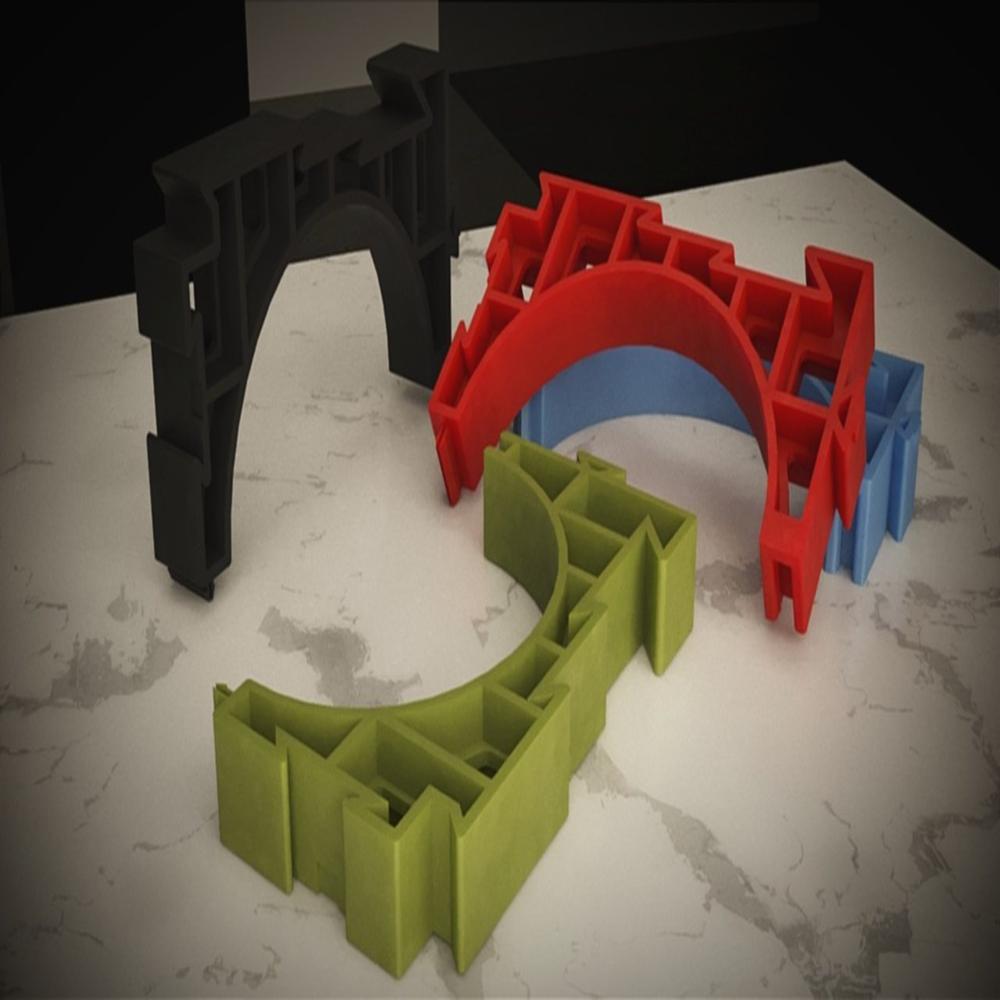
Spacers shall consist of interlocking modules. The interlocking modules shall include an
internal vertical channel on both side edges of the spacers. When the duct bank is
assembled.
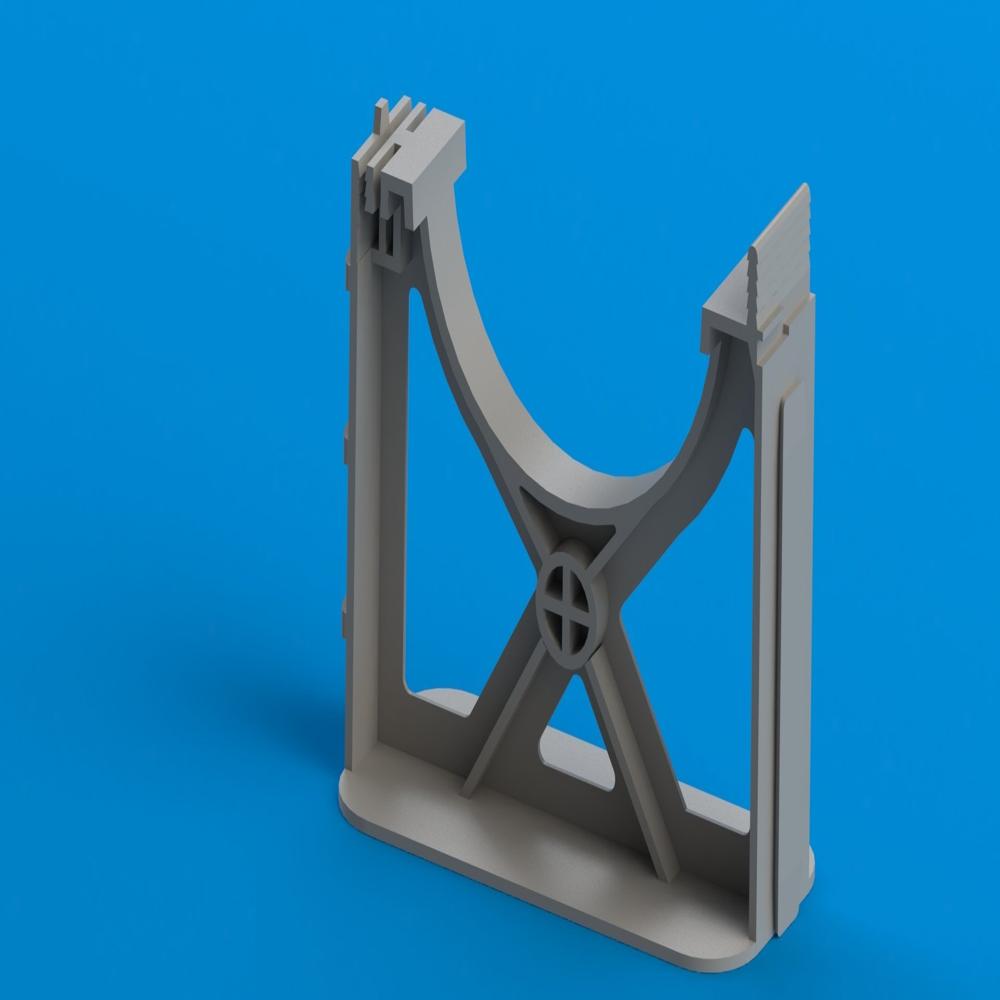
Reliable Alignment and SpacingDuct bank spacers ensure precise center-to-center distances, typically 100 mm (4 inches), between conduits. Their flat grid structure and alignment notches guarantee consistent separation, which helps optimize cable management and prevents movement during the pouring of concrete. These features simplify assembly and maintain uniform duct geometry throughout the bank.
Engineered for Durability and SafetyManufactured from high-grade virgin HDPE and treated with a UV-resistant coating, these spacers deliver high tensile and yield strength, non-corrosiveness, and excellent dielectric properties. Their material construction and robust design allow them to easily support the combined weight of conduits and concrete, making them ideal for long-lasting underground applications.
Effortless Installation and FlexibilityThe snap-fit interlock system facilitates manual placement and alignment during duct bank assembly. Their reusable and recyclable nature adds cost-effectiveness, while customization options enable compatibility with various conduit layouts and project specifications. Storing them in dry conditions ensures optimal performance and product longevity.
FAQ's of Duct Bank Spacers Spacing:
Q: How are duct bank spacers installed during conduit bank assembly?
A: Duct bank spacers are manually positioned between conduits as the duct bank is being assembled. Their snap-fit, mechanical interlock design allows for secure and quick placement without the need for specialized tools, ensuring proper conduit alignment throughout construction.
Q: What conduit sizes can these spacers support?
A: These spacers are engineered to accommodate conduits ranging from 2 to 6 inches in diameter, with a typical 100 mm (4 inch) center-to-center spacing, and support an outer diameter of 80 mm for specific conduit types.
Q: When should custom duct bank spacers be considered?
A: Custom spacers should be used for duct banks with unique layouts, non-standard conduit sizes, or specific spacing requirements that standard models may not meet. Manufacturers offer customization services to match project-specific needs.
Q: Where are these duct bank spacers most commonly used?
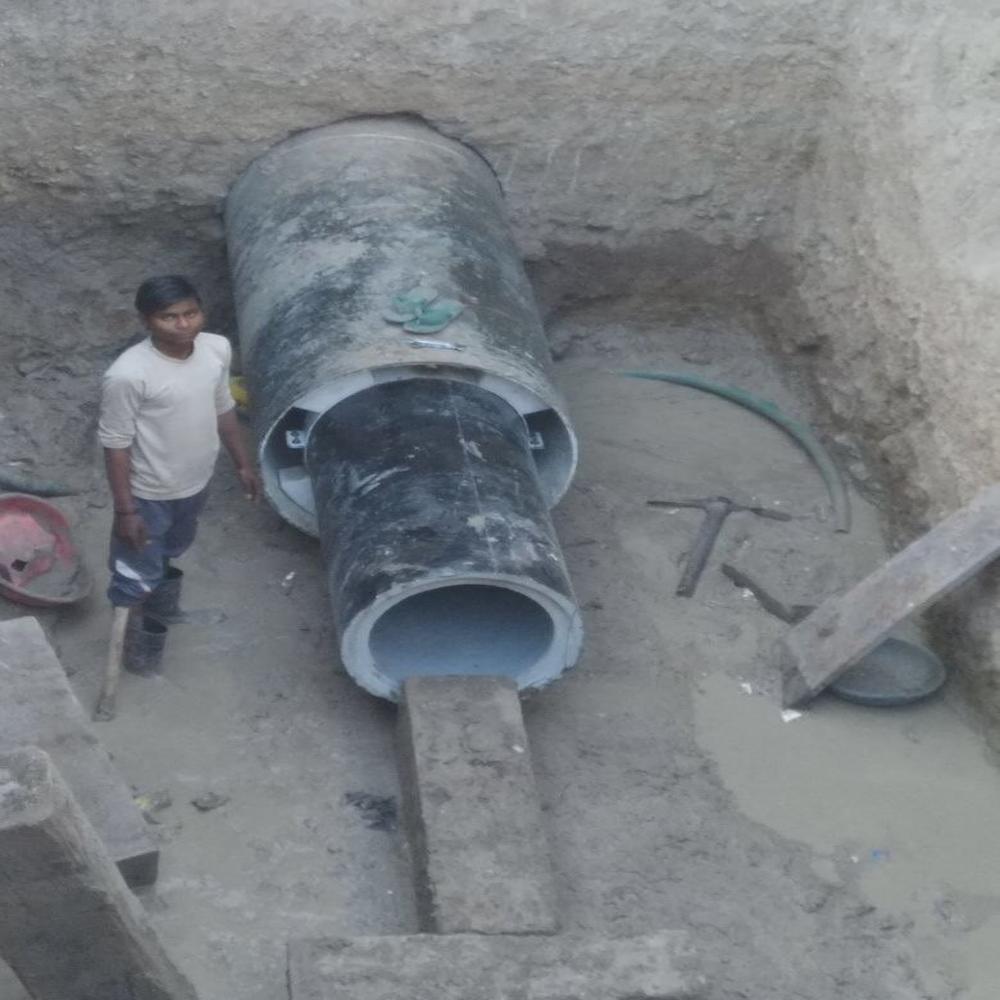
A: They are primarily designed for underground electrical and telecom duct bank installations, where consistent conduit separation, electrical insulation, and alignment are critical for system integrity and ease of future maintenance.
Q: How do these spacers enhance safety and durability in duct bank systems?
A: The spacers' virgin HDPE construction, UV stabilized coating, and high dielectric strength result in excellent resistance to electrical currents, corrosion, and environmental degradation. Their strong mechanical properties allow them to withstand compressive and tensile stresses, maintaining structure throughout the life of the duct bank.
Q: What benefits do reusable and recyclable spacers offer?
A: Reusable and recyclable spacers reduce material costs and environmental impact, offering added value in large-scale and repeated infrastructure projects by allowing spacers to be repurposed or recycled after use.
Q: What storage conditions are recommended for these spacers?
A: Store duct bank spacers in a dry environment and avoid prolonged exposure to direct sunlight to preserve their mechanical properties and UV-resistant finish, ensuring product longevity and reliability during installation.





 English
 Spanish
 French
 German
 Italian
 Chinese (Simplified)
 Japanese
 Korean
 Arabic
 Portuguese
 Send Inquiry

