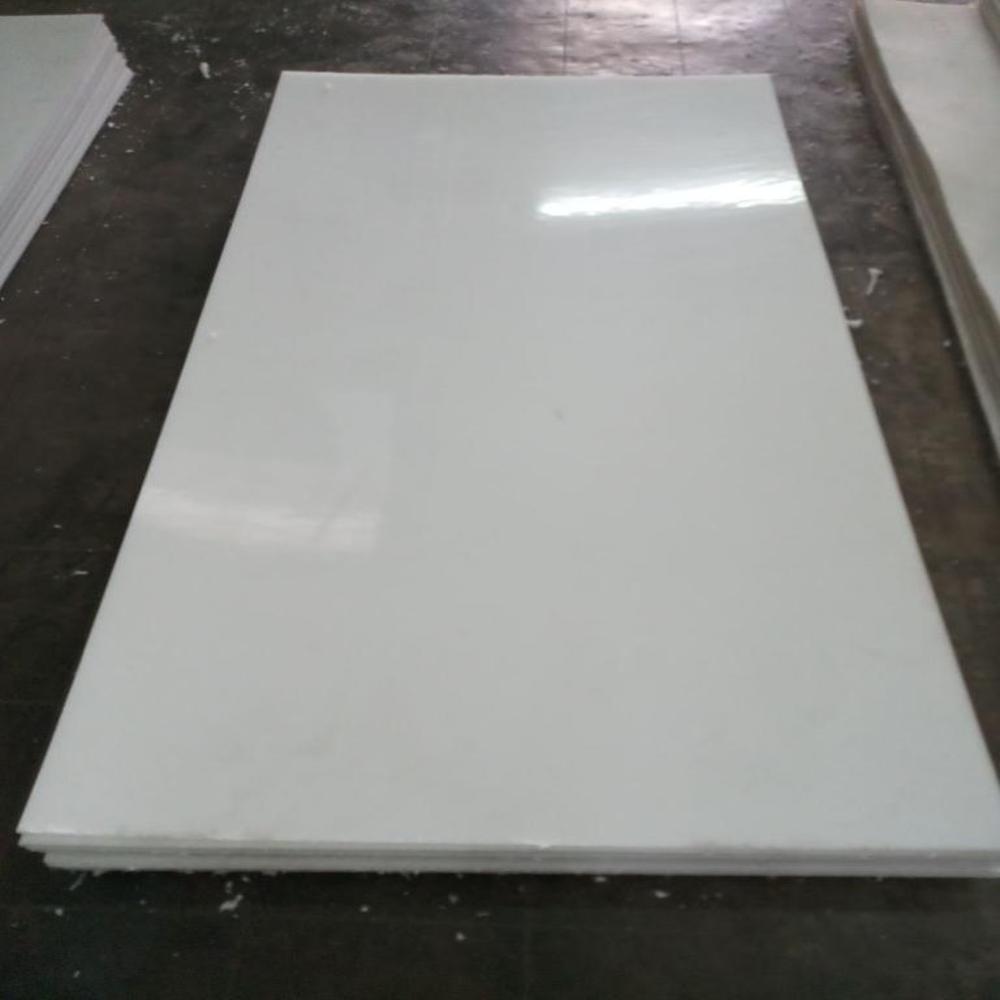
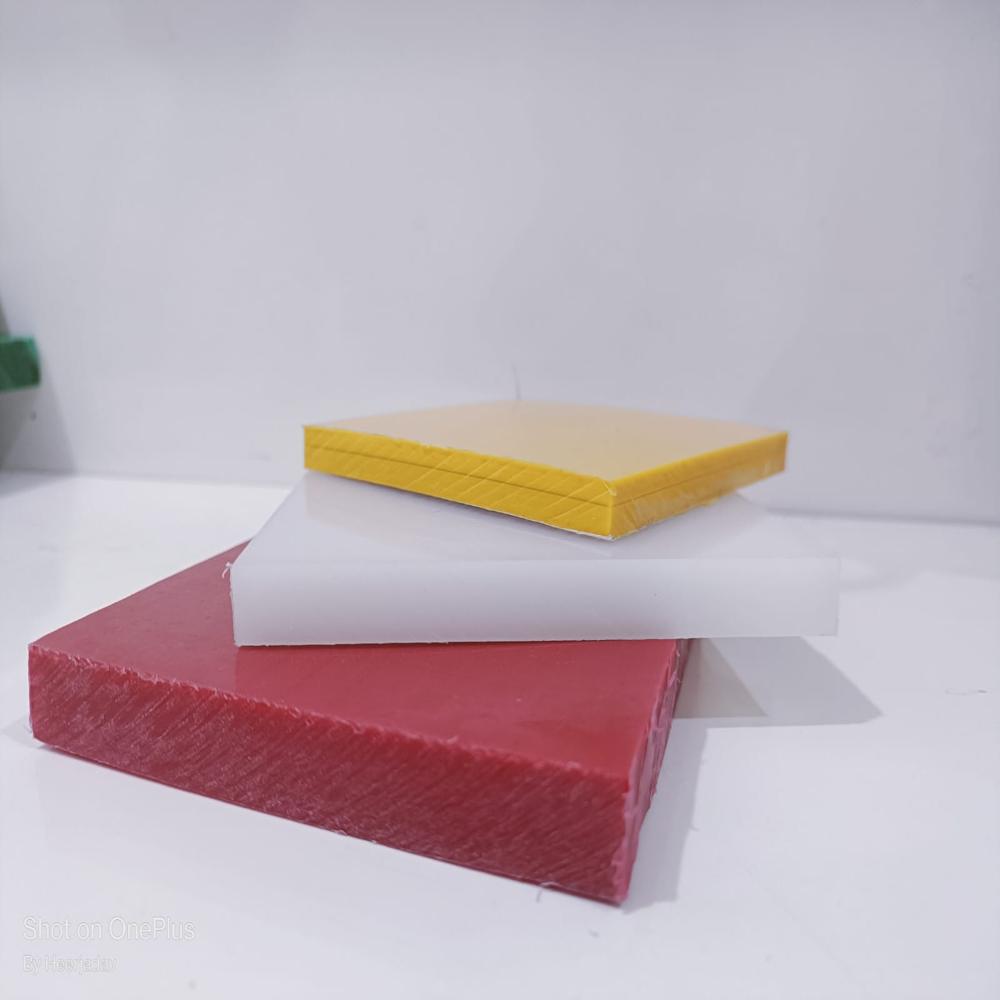
About High Density Polyethylene Sheets
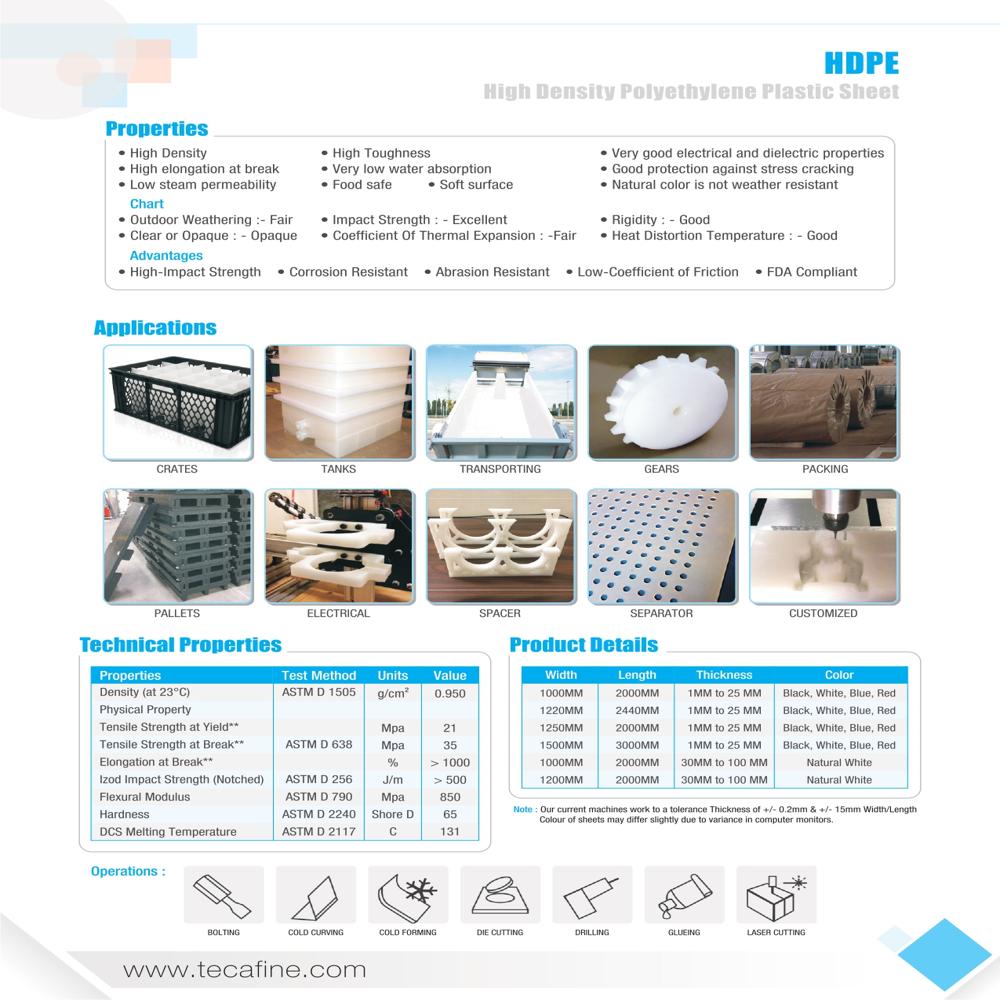
Polyethylene has a good chemical resistance to almost all acids, lyes, many organic solvent and hot water.HDPE has good insulation properties and its easy to weld. The operating temperature is from -50 C to 90+ C.
The above values are the general properties as per the manufacturers specifications and are presumed To be true as per standard practice. We do not endorse the above values. Tecafine Polymer Pvt Ltd is Indemnified from any or all liabilities and does not make any guarantees.
This is for your reference and records please.
Versatile Applications Across IndustriesHDPE sheets are widely used in industries such as food processing, packaging, construction, chemical handling, and signage due to their durability, flexibility, and resistance to moisture and chemicals. Their high impact strength and good electrical insulation make them suitable for protective barriers, lining, and engineering applications. With the option of food-grade compliance and customized sizes, they offer targeted solutions for specific requirements.
Exceptional Performance PropertiesEngineered for premium quality, HDPE sheets offer high tensile and flexural strength, exceptional elongation at break, and minimal water absorption. Available with either smooth or textured finishes, they can withstand harsh environments and a wide working temperature range from -50C to +80C. They are also 100% recyclable, adding to their sustainable advantages for environmentally conscious applications.
FAQ's of High Density Polyethylene Sheets:
Q: How are HDPE sheets typically used in industrial applications?
A: HDPE sheets are used for a wide range of industrial applications including protective linings, cutting boards, chemical tanks, machine parts, and food processing equipment. Their chemical resistance, high impact strength, and moisture barrier make them ideal for these uses.
Q: What is the manufacturing process for these HDPE sheets?
A: These HDPE sheets are manufactured using either extrusion or molding methods. Both processes ensure a uniform material with high mechanical properties and allow for the production of various thicknesses and customizable sizes.
Q: When should I choose textured versus smooth HDPE sheet finishes?
A: Textured finishes are beneficial when slip resistance or surface grip is required, such as in flooring or work surfaces. Smooth finishes are ideal for easy cleaning or when a sleek aesthetic is desired, especially for signage and display applications.
Q: Where can customized HDPE sheet sizes and colors be ordered?
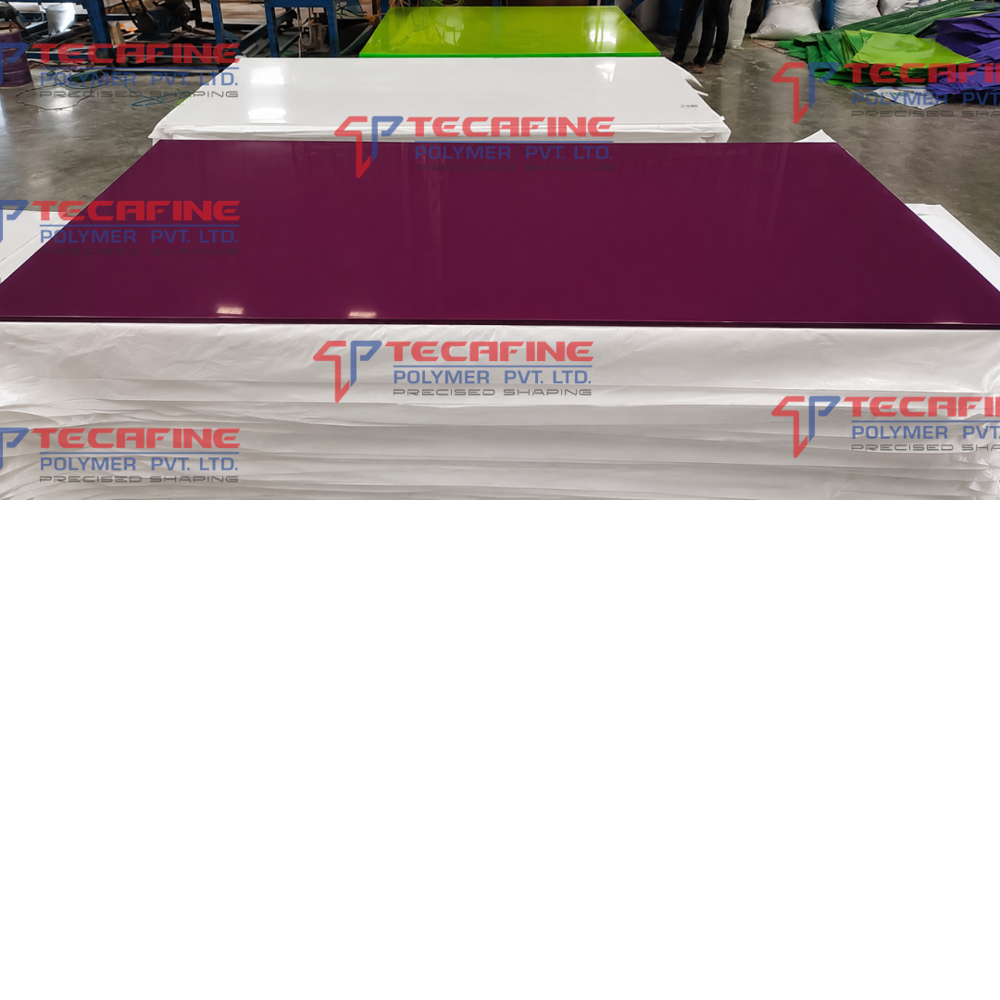
A: Customized HDPE sheet sizes and various color options can be ordered directly from the manufacturer or authorized suppliers in India. Standard sizes are available, but specific requirements regarding dimensions, colors, and grades can usually be accommodated upon request.
Q: What benefits do HDPE sheets provide over other plastics?
A: HDPE sheets offer superior impact strength, excellent chemical and moisture resistance, and low water absorption. They are also highly flexible, recyclable, and available in food-grade varieties, making them more versatile and sustainable than many other plastic materials.
Q: How does the optional UV resistance impact HDPE sheet applications?
A: Optional UV resistance enhances the durability of HDPE sheets for outdoor applications by protecting against sun-related degradation. This feature is ideal for signage, outdoor equipment, and agricultural use where prolonged UV exposure is expected.




 English
 Spanish
 French
 German
 Italian
 Chinese (Simplified)
 Japanese
 Korean
 Arabic
 Portuguese
 Send Inquiry
 Send Inquiry

